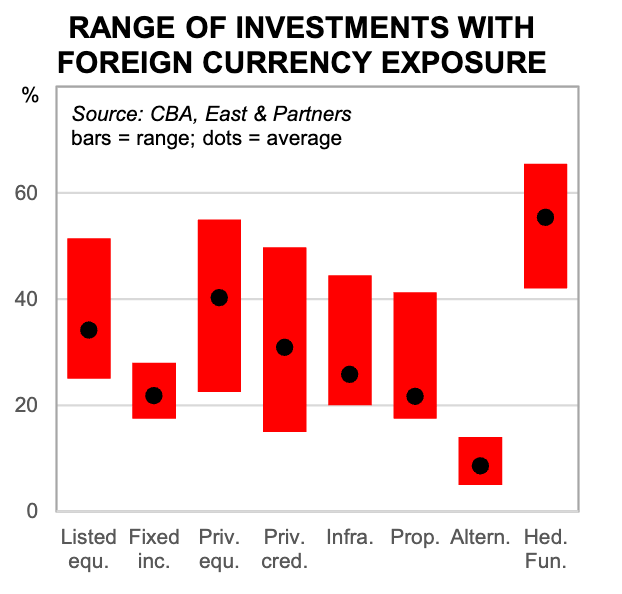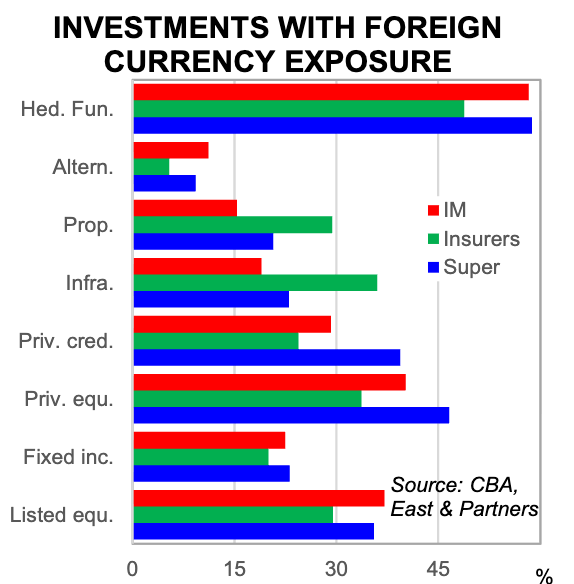
(16 October 2026 – Australia) 9 in 10 money managers plan to lift currency hedge ratios in Q4 2026 while Australian corporates are keeping FX protection high amid continued uncertainty over the global outlook and Aussie Dollar, the latest CommBank FX Barometer reveals.
Australian corporates and money managers are both leaning into currency risk management – even as their strategies diverge.
Money managers are looking for more offshore exposure without necessarily taking on more unhedged currency risk, while corporates are holding firm on protection amid a still-uncertain global backdrop.
Money managers Lift Hedging Intentions
The October analysis based on direct interviews with 136 money managers by East & Partners, split across super funds, insurers and investment managers, found three-quarters expect their FX exposure to increase over the next quarter. Nine in ten plan to raise their hedge ratios and not one of the 136 respondents planned to cut their hedge ratio.
“This reflects the appeal of offshore markets. Foreign assets help Australian money managers meet their risk and return objectives” commented CBA Head of Foreign Exchange, International & Geoeconomics, Joseph Capurso.
“In our view, the combination is consistent with a greater willingness to retain currency risk in higher-risk investments. The research also found hedging behaviour varies significantly depending on how exposures are managed, with more than half of money managers at least partly incorporating a total portfolio approach alongside asset-class hedging. We see these results as helping to explain why a single asset-class hedge ratio is an incomplete guide to currency risk management” Capurso added.
Corporates Keep FX Protection High
Among the 867 corporates directly interviewed by East & Partners, hedging participation rose for both importers (up to 87 percent) and exporters (up to 73 percent), while businesses that both import and export edged down slightly to 78 percent.
Corporates still expect the Australian Dollar to weaken over the coming year against the US Dollar, to around 0.70 by end-March 2027 and 0.68 by end-September 2027, but the pace of decline has slowed since the July round of research and inaugural April round of research.
Business size remains the clearest divide in hedging behaviour. All businesses with turnover above $A4 billion hedge their FX exposure, with large corporates also using a broader toolkit, including options, forwards and cross-currency swaps. CBA Economist and Currency Strategist Carol Kong said the shift reflects recent currency resilience. On risk, concerns differ by trade profile: interest-rate changes lead among importers, while exporters are far more focused offshore.
Businesses engaged in both importing and exporting were most concerned about AI and technological disruption.
“The shift likely reflects the resilience of the Australian dollar during the survey period between mid-August and mid-September, supported by a reassessment higher of Australian interest rates, a lift in commodity prices and strong risk sentiment despite the unresolved Middle East conflict,” Kong said.
“Larger corporates make greater use of more sophisticated hedging instruments because they have dedicated treasury functions, more complex funding requirements and broader risk management capabilities. US trade and tariff policy was the standout concern among exporters, cited by 29%, well ahead of the other risks. The result likely reflects exporters’ direct exposure to changes in market access, tariffs and global trade flows,” Kong said.